GC/MS
Gas Chromatography - Mass Spectrometry
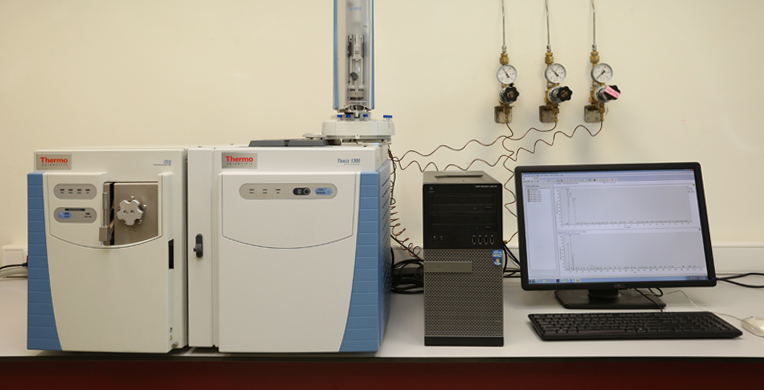
Gas Chromatography–Flame Ionization Detection–Mass Spectrometry (GC-FID-MS) is a widely used type of chromatography in analytical chemistry for the separation and analysis of compounds that can be vaporized without decomposition. It is also known as vapor-phase chromatography and gas-liquid partition chromatography. It is commonly employed to test the purity of a particular substance or to separate the different components of a mixture (as well as to determine the relative amounts of these components). The Thermo Scientific Trace 1300 GC system integrated into our center is an instrument used across many sectors, such as environmental science, food safety, and toxicology. With its FID and ECD detectors, the Trace 1300 GC system provides superior performance, particularly in the analysis of volatile organic and chlorinated compounds.
This system is utilized for separation and analysis in biochemistry, biotechnology, petrochemistry, and pharmacology; for the separation of sterols from vegetable oils; in genetic studies; for fatty acid determination in food and analysis of certain pesticides; in forensic toxicology laboratories; for the qualitative and quantitative determination of amino acids; and for the detection of trace amounts of mineral oils and hydrocarbons in clean water, wastewater, solid waste, and waste oil samples. The primary reasons for the extensive industrial use of GC include its ability to resolve even highly complex samples—including isomers—into their components, rapid results, minimal sample requirement (microliters), applicability even for samples with very low vapor pressure, higher reliability compared to other instrumental methods, and the generation of highly sensitive qualitative and quantitative data.
Copyright © 2019 PAU - ILTAM