UV
UV Absorption Spectroscopy
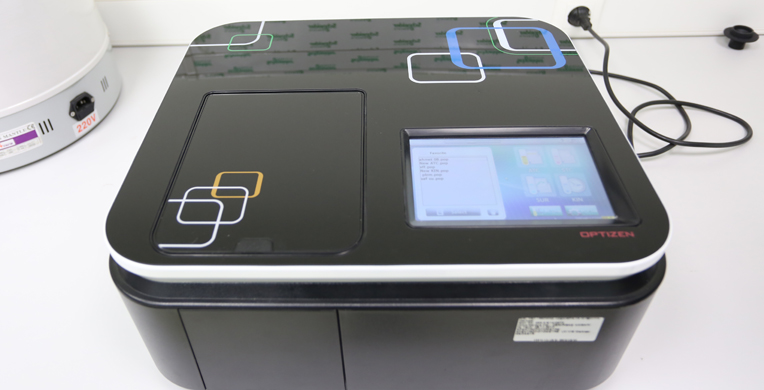
Ultraviolet and visible light (UV-Vis) absorption spectroscopy is the measurement of the attenuation of a beam of light after it passes through a sample or is reflected from a sample surface. A decrease in light intensity indicates an increase in absorption. The concentration of a sample is determined by measuring its absorbance at a specific wavelength. UV-Vis spectroscopy is generally used to measure molecules in solution or inorganic ions and complexes. Many molecules absorb at UV or visible wavelengths, and different molecules absorb at distinct wavelengths. An absorption spectrum consists of several absorption bands that reveal the structure of the molecule. This technique is applicable in water quality analysis, biochemical assays, and the analysis of various chemical substances.
The optical system of the instrument is Single Beam (Grating 1200 lines/mm); however, similar to Double-Beam technology, the device continuously takes measurements from the blank and subtracts the blank value from the sample. The wavelength range of the instrument is 190–1100 nm. It features a plug-in Tungsten-Halogen lamp and a Deuterium lamp for use across these wavelengths, which can be easily replaced. Each lamp activates automatically at the appropriate wavelength and performs its own optical adjustment.
Copyright © 2019 PAU - ILTAM